
Iran Steel Supply Reaches 138,151 Tonnes | Rebar Market Outlook
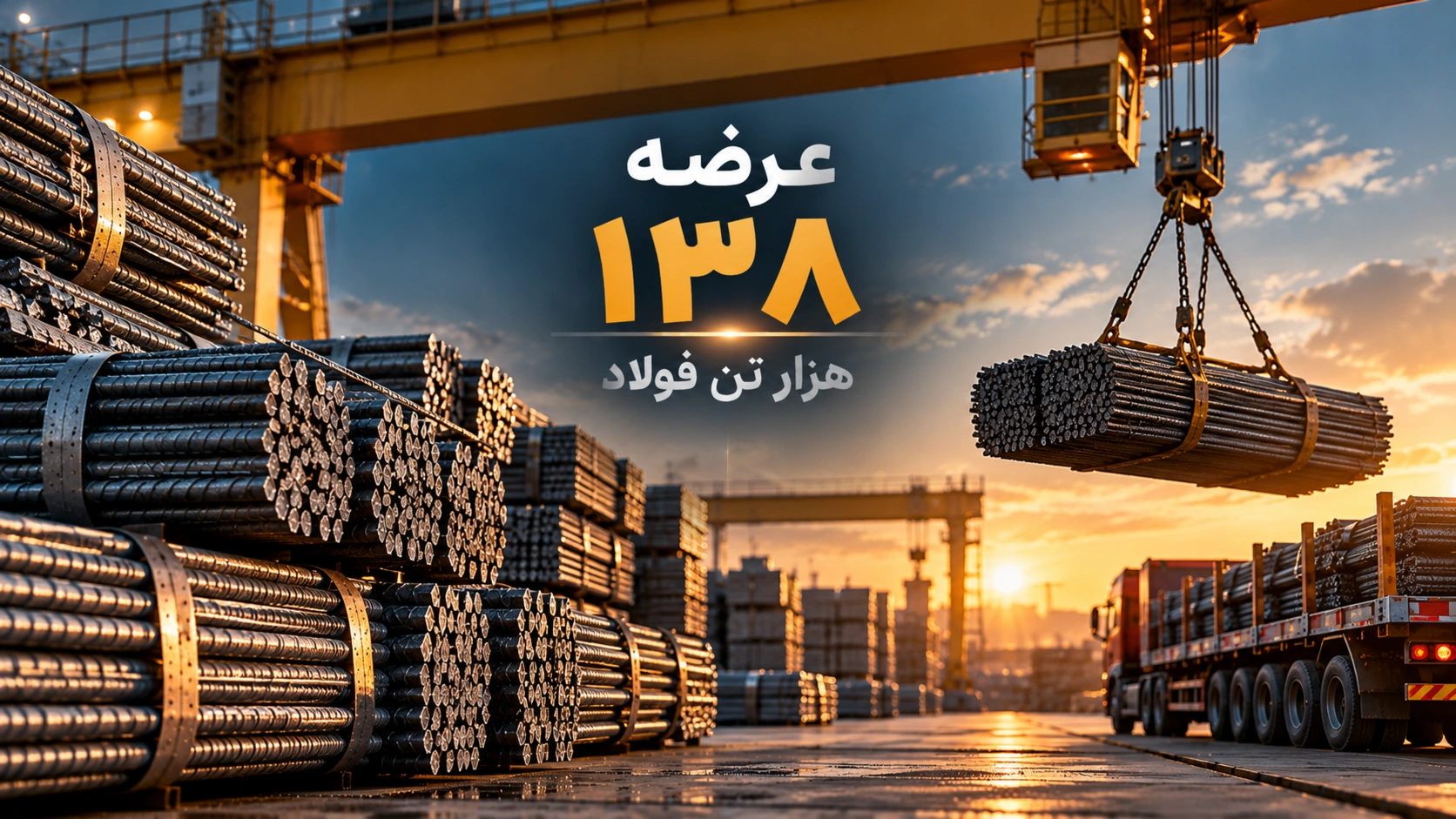
Iran Schedules 138,151 Tonnes of Steel for Exchange Offerings as Rebar Market Faces a New Supply Test
Iran's steel market entered October 28, 2026, with a substantial volume of steel products scheduled for offering on the Iran Mercantile Exchange.
According to the day's published market schedule, approximately 138,151 tonnes of steel products were listed for offering in the industrial and mining trading hall.
The development is relevant to rebar manufacturers, steel distributors, construction companies and international buyers monitoring Iranian steel supply and pricing conditions.
Iran Steel Supply on October 28, 2026
The industrial and mining hall was scheduled to offer a combined 143,451 tonnes of products, including steel, copper and precious-metal concentrates.
Steel accounted for 138,151 tonnes of the announced volume, making it the dominant product group in that hall.
Across the exchange's various trading halls, the total scheduled offering volume reached 436,838 tonnes, including both steel and non-steel commodities.
These figures represent announced offerings, not confirmed transaction volumes.
Major Rebar Producers Participating in the Market
The published offering notices identify several Iranian steel producers with rebar products scheduled for the October 28 session.
Khorasan Steel Complex listed 6,700 tonnes of A3 ribbed rebar in diameters ranging from 14 to 20 mm, with cash settlement terms.
Jahan Foulad Sirjan scheduled 4,000 tonnes of A3 rebar in the 14–20 mm range and another 1,000 tonnes in the 22–32 mm range.
Saba Foulad Zagros also listed 3,375 tonnes of A3 rebar in 18 mm and 20 mm diameters.
The range of suppliers and product specifications gives buyers several alternatives, although availability ultimately depends on the results of the trading session.
Rebar Base Prices on the Iran Mercantile Exchange
Several standard A3 rebar offerings carried a listed base price of 1,064,416 Iranian rials per kilogram.
This is equivalent to approximately 106,442 Iranian tomans per kilogram.
However, the base price should not be confused with the final transaction price or a retail market quotation.
Actual procurement costs depend on bidding outcomes, contractual terms, transportation and delivery requirements.
Does Higher Steel Supply Mean Lower Rebar Prices?
A larger offering volume can improve product availability and create more purchasing options.
Nevertheless, an increase in steel supply does not automatically result in lower rebar prices.
If purchasing interest remains limited, competition for available products may weaken.
On the other hand, strong demand can support prices even when substantial quantities are offered.
For this reason, analysts should monitor actual sales volumes and bidding activity before drawing conclusions about price direction.
Steel Billet Costs Remain Important
Steel billet is a major input in rebar manufacturing, particularly for rolling mills.
Changes in billet procurement costs can influence rebar quotations, alongside energy expenses, manufacturing efficiency and transportation costs.
However, producers' ability to pass higher costs on to customers depends on purchasing demand and competitive conditions.
The relationship between billet and rebar prices therefore requires analysis of both upstream production costs and downstream consumption.
Delivery Terms and Payment Conditions
The October 28 offering notices also highlight differences in delivery schedules and payment arrangements.
Some products are offered under cash settlement, while others allow combinations of cash and credit.
These conditions can influence working capital requirements and the effective cost of purchasing steel.
For international buyers, domestic exchange quotations should not be treated as export offers without confirming currency conversion, logistics and contractual terms.
Iran Rebar Market Outlook for November 2026
The short-term outlook for Iranian rebar prices will depend on the outcome of current exchange offerings, steel billet costs and demand from construction projects.
Limited purchasing activity could reduce price competition, while stronger orders may support higher transaction prices.
Until the final trading results are available, the announced offering volume alone cannot establish whether the market will rise or decline.
Conclusion
Iran's scheduled offering of 138,151 tonnes of steel on October 28 is a significant development for participants monitoring the country's steel supply chain.
However, the final market impact will depend on actual transaction volumes, bidding behavior and prevailing production costs.
Steel buyers should compare product grades, manufacturers, settlement conditions and delivery expenses rather than relying solely on announced base prices.
Frequently Asked Questions
Were all 138,151 tonnes of steel sold?
The figure refers to scheduled offerings. It does not confirm that the entire quantity was traded.
Can higher steel supply reduce rebar prices?
It can reduce supply pressure, but the outcome depends on buyer demand and competition.
Are Iranian exchange base prices the same as export prices?
No. Export quotations depend on additional commercial, logistical and delivery terms.